For generations, a steadfast rule has been passed down in kitchens: “Never use soap on cast iron.” This piece of culinary wisdom has instilled fear in many a home cook, leading to a myriad of intricate, soap-free cleaning rituals. But is this age-old decree still relevant in today’s world? The truth, much like a perfectly seasoned cast iron skillet, is more nuanced than it appears. This comprehensive guide will debunk the misconceptions, clarify the science behind cast iron care, and provide you with the most effective methods to maintain your cherished cookware, including when and how modern dish soap can actually be a beneficial part of your routine.
The Enduring Myth: Why “No Soap” Became Standard Practice
At the heart of cast iron care lies “seasoning,” a thin, polymerized layer of baked-on oil that bonds to the iron surface. This natural, non-stick coating not only prevents food from sticking but also protects the pan from rust. The historical prohibition against using soap on cast iron dates back to a time when traditional soaps were made with lye (sodium hydroxide). Lye is a powerful alkaline chemical, and these early soaps could indeed strip away the hard-earned seasoning, leaving the bare iron vulnerable to rust and food adhesion. Cooks, rightly concerned about preserving their valuable cookware, adopted a strict “no soap” policy. This traditional view, ingrained deeply into culinary culture, has persisted even as cleaning agents have evolved.
Decoding Detergent: What Makes Modern Soaps “Safe” (in Moderation)
Modern dish detergents are fundamentally different from their lye-laden predecessors. Today’s dish soaps are formulated with gentle surfactants—surface-active agents—designed to emulsify grease and lift food particles without containing the harsh, seasoning-destroying lye. These surfactants effectively break down oils and fats, making them easier to rinse away, yet they do not chemically dissolve the polymerized bond of a well-established cast iron seasoning.
While a small amount of mild dish soap is generally safe for a well-seasoned pan, moderation is key. Using excessive amounts of soap, especially on a newly seasoned pan, could potentially diminish some of the seasoning over time. The goal is to clean effectively without stripping away the protective layer.
The Real Enemies of Cast Iron Seasoning
While modern dish soap isn’t the villain it once was, certain cleaning practices remain detrimental to cast iron:
- Dishwashers: This is the ultimate enemy of cast iron. The prolonged exposure to intense heat, harsh detergents, and powerful water jets in a dishwasher will relentlessly strip away seasoning and almost invariably lead to rust.
- Soaking: Leaving cast iron to soak in water for extended periods is an express lane to rust. Cast iron is porous and will absorb moisture, leading to oxidation.
- Harsh Abrasives: Steel wool, scouring powders like Comet, or other aggressive scrubbers can physically scratch and remove the seasoning layer, regardless of whether soap is used. While chain mail scrubbers are abrasive, they are generally considered safe because their design helps remove stuck-on food without damaging the polymerized surface.
- Acidic Foods: Cooking highly acidic foods (like tomato sauce or vinegar) for extended periods can also degrade seasoning and potentially impart a metallic taste to your food. It’s best to cook these briefly or use a different pan.
Comparing Cast Iron Cleaning Methods: Detergent vs. Detergent-Free
Understanding the role of detergent allows for a more flexible and hygienic approach to cast iron care. Here’s a comparison of common cleaning methods:
Detergent Use (When Appropriate)
A small amount of mild dish soap can be used for very greasy pans or when you need a thorough cleaning for hygiene, especially after cooking meats.
Detergent-Free Methods
These traditional methods are excellent for routine cleaning and maintaining a robust seasoning.
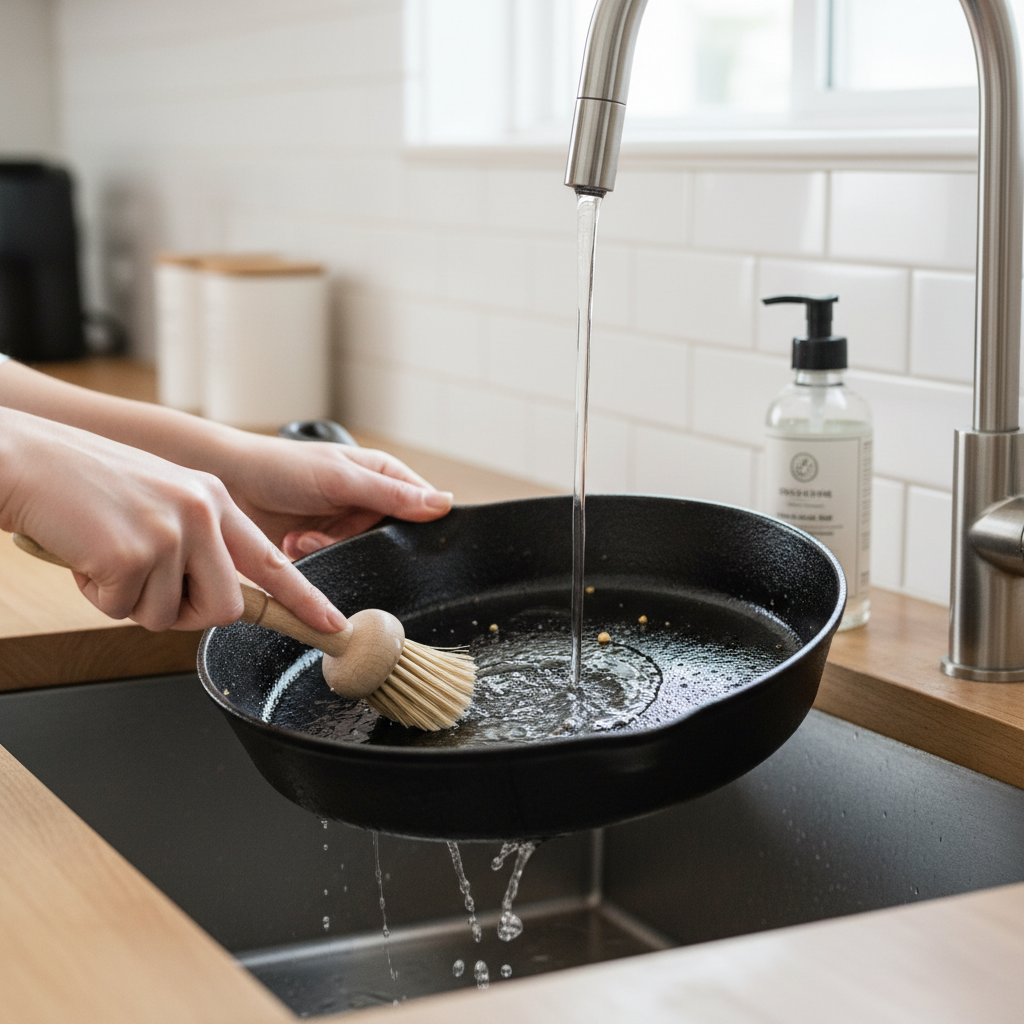
- Hot Water & Stiff Brush/Sponge: For most everyday messes, hot water and a stiff brush or non-abrasive sponge are sufficient to remove food residue.
- Salt Scrub: Coarse kosher salt acts as a natural abrasive. Pour a generous amount of salt into a still-warm pan, add a little hot water, and scrub with a paper towel or sponge. The salt helps lift stubborn bits without harming the seasoning.
- Pan Scrapers: Plastic pan scrapers are ideal for dislodging cooked-on food without damaging the surface.
- Boiling Water: For particularly stubborn, stuck-on food, fill the pan with a bit of water and bring it to a boil. Simmer for a few minutes, then use a wooden spoon or scraper to gently loosen the particles.
- Chain Mail Scrubber: These specialized scrubbers are highly effective at removing tough residue without stripping seasoning, making them a popular tool for cast iron enthusiasts.
| Cleaning Method | Pros | Cons | Best Use Case |
|---|---|---|---|
| Mild Dish Soap | Effective degreaser, good for hygiene. | Overuse can slightly diminish seasoning. | Very greasy pans, occasional deep clean after meat. |
| Hot Water & Scrub | Gentle, preserves seasoning, environmentally friendly. | May not tackle extremely stuck-on food or heavy grease. | Everyday cleaning for most cooking. |
| Kosher Salt Scrub | Natural abrasive, excellent for stuck-on food. | Can be messy, requires rinsing. | Removing stubborn food bits and caked-on residue. |
| Pan Scrapers | Efficient for dislodging without abrasion. | Not ideal for overall cleaning or grease removal. | Spot cleaning for larger stuck food particles. |
| Boiling Water | Loosens burnt-on food effectively. | Can be time-consuming, doesn’t remove grease. | Softening heavily encrusted food. |
| Chain Mail Scrubber | Highly effective for tough messes, gentle on seasoning. | Requires a separate tool purchase. | Aggressive scrubbing without damaging seasoning. |
“The fear of soap on cast iron is largely a relic of the past; modern dish detergents, used correctly, can contribute to both cleanliness and longevity.”
Your Guide to Optimal Cast Iron Care (Beyond Cleaning)
Proper care extends beyond just the cleaning method. These steps are crucial for preserving your cast iron’s integrity:
- Immediate Drying: After washing, always dry your cast iron thoroughly and immediately. Leaving it to air dry can lead to rust. Many prefer to place it on a stovetop over low heat for a few minutes until all moisture evaporates.
- Light Re-oiling: Once completely dry and still warm, apply a very thin layer of high smoke point cooking oil (like vegetable, canola, or grapeseed oil) to the entire cooking surface and even the exterior. Use a paper towel to buff it in, wiping away any excess until the pan no longer looks wet. This step replenishes the seasoning and adds a protective barrier.
- Proper Storage: Store your cast iron in a dry place. If stacking pans, place a paper towel between them to prevent moisture buildup and scratches.
- Re-seasoning: If your seasoning becomes dull, sticky, or uneven, or if rust appears, it’s time to re-season the pan. This involves cleaning it thoroughly, applying a very thin layer of oil, and baking it in an oven at a high temperature for an hour.
Tips for Maintaining a Pristine Cast Iron Surface
Consistent habits contribute significantly to the performance and lifespan of your cast iron cookware.
- Don’t Let Food Sit: Clean your pan shortly after use. Allowing food to dry and harden makes cleaning more difficult.
- Preheat Properly: Always preheat your cast iron slowly and thoroughly before adding food. This ensures even cooking and helps prevent sticking.
- Regular Use Builds Seasoning: The more you use and properly maintain your cast iron, the better its seasoning will become.
- Dealing with Rust: If rust spots appear, scrub them away with a mild abrasive (like salt) or a scrubber, then thoroughly dry and re-season the affected area.
Conclusion
The widely held belief that you must never use detergent on cast iron is, for the most part, a myth rooted in outdated practices. Modern dish soaps are generally safe for well-seasoned cast iron when used in moderation and followed by proper drying and oiling. The true enemies are harsh lye-based cleaners, dishwashers, prolonged soaking, and overly aggressive abrasives. By understanding the science of seasoning and adopting a consistent care routine that prioritizes thorough drying and regular re-oiling, you can confidently use your cast iron for decades. Embrace these modern insights to keep your cast iron performing at its best, ensuring delicious meals and hassle-free cleaning. Which of these methods will you integrate into your cast iron routine first?
Frequently Asked Questions
Can I use any dish soap on cast iron?
|
Our Picks for the Best Dishwashing liquid in 2026
As an Amazon Associate I earn from qualifying purchases.
|
||
| Num | Product | Action |
|---|---|---|
| 1 | Dawn Platinum Dish Soap, Fresh Rain Scent Liquid Dishwashing Detergent, Powerful Dawn Dish Soap for Tough Grease Removal, 13 oz |

|
| 2 | Cascade Complete Dishwasher Detergent Liquid Gel, Dish Detergent, Dishwasher Soap, Citrus, 75oz |
|
| 3 | Palmolive Ultra Dishwashing Liquid Dish Soap, Pure + Clear Fragrance Free - 32.5 Fluid Ounce (Packaging may vary) |
|
| 4 | Dawn Dishwashing Liquid, Original Scent, 38 fl oz |
|
| 5 | Dawn EZ-Squeeze Ultra Dish Soap, Dishwashing Liquid, Original, Dish Soap Refill, 22 fl oz |
|
| 6 | Ajax Ultra Liquid Dish Soap Orange Scent, Triple Action, 90 fl oz Bottle |
|
| 7 | Dawn Ultra Original Dish Soap Refill Jug Large Size Original Blue Liquid Dishwashing Detergent, Powerful Dawn Dish Soap for Grease, 51.5oz (Pack of 2) |
|
| 8 | Dawn Ultra Original Dish Soap Refill Jug, Large Size Original Blue Liquid Dishwashing Detergent, Powerful Dawn Dish Soap for Grease, 51.5 oz |
|
| 9 | Ajax Ultra Liquid Dish Soap Orange Scent,Triple Action, Mess-Free, Easy-Flip Cap, 52 fl oz Bottle |
|
| 10 | Dawn Platinum EZ-Squeeze Dish Soap, Dishwashing Liquid, Fresh Rain, 2x18oz Bundle |
|
Most modern, mild dish soaps are safe for cast iron. Avoid harsh degreasers or soaps with lye, though lye is rare in contemporary dish detergents. Always use in moderation and rinse thoroughly.
What is seasoning, and why is it important?
Seasoning is a polymerized layer of baked-on oil that bonds to the cast iron surface. It creates a natural non-stick coating, protects the iron from rust, and enhances the flavor of food over time.
How often should I season my cast iron pan?
Many pre-seasoned pans come ready to use. Regular cooking and proper care (drying and light re-oiling after each wash) will continuously build and maintain seasoning. You typically only need to perform a full re-seasoning if the existing layer is damaged or rust appears.
What if my cast iron pan rusts?
If rust appears, scrub it off using a mild abrasive like salt, steel wool (for rust removal only, then re-season), or a stiff brush. Thoroughly dry the pan, then apply a thin layer of cooking oil and re-season it in the oven.
Can I put my cast iron in the dishwasher?
No, you should never put cast iron in the dishwasher. The prolonged exposure to moisture, high heat, and aggressive detergents will strip the seasoning and almost certainly lead to severe rusting.
What’s the best oil for seasoning cast iron?
High smoke point oils like vegetable oil, canola oil, grapeseed oil, or flaxseed oil are excellent choices for seasoning cast iron. These oils polymerize well, creating a durable, non-stick surface. Olive oil has a lower smoke point and is generally not recommended for seasoning.