In an age where environmental consciousness shapes our choices, many of us are re-evaluating everyday household staples. Among the most frequently used items in any kitchen, dish soap stands out. While liquid detergents have dominated for decades, a venerable contender from France is making a powerful comeback: Savon de Marseille. This traditional French cube soap, celebrated for its natural composition and versatility, offers a compelling alternative for those seeking an eco-friendlier and gentler approach to dishwashing. But how does this age-old remedy truly stack up against modern options, especially when it comes to tackling greasy dishes and maintaining sparkling clean results?
Types of Dishwashing Soaps: A Broader Look
The world of dishwashing solutions is more diverse than a quick glance suggests, encompassing various forms each with unique advantages and disadvantages. Most kitchens today feature liquid dish soap, known for its robust suds and convenient squeeze-bottle application. These are generally formulated for maximum grease-cutting and often include skin softeners or antibacterial agents.
Beyond liquids, we find gel detergents for dishwashers, pods or tablets offering pre-measured convenience, and even foaming soaps designed for hand washing. Each type aims to simplify the chore, but often comes with a trade-off in terms of chemical content, packaging waste, or impact on sensitive skin.
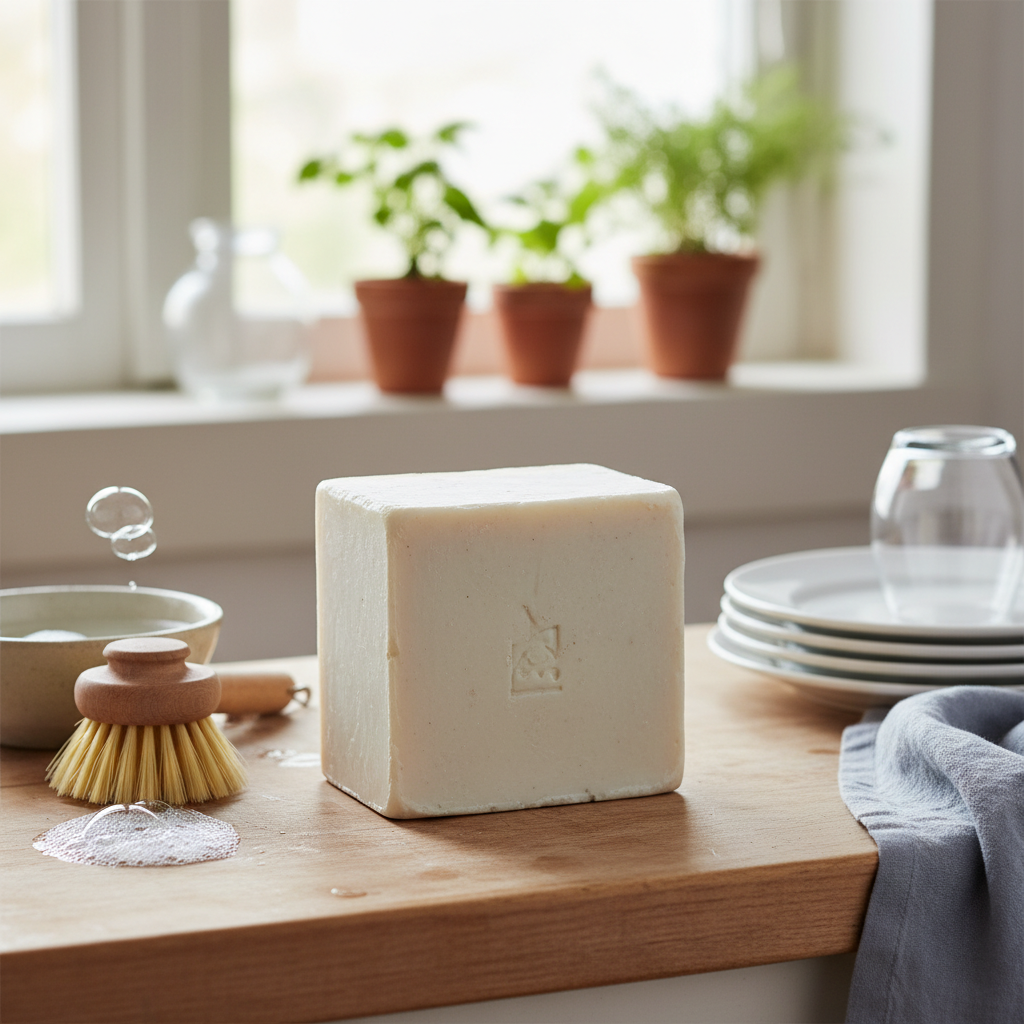
Solid dish soap bars, like Savon de Marseille, represent a return to tradition and a leap towards sustainability. Unlike their liquid counterparts, these bars typically boast minimal packaging, often just a paper wrap, significantly reducing plastic waste. Their concentrated form also means they last longer, providing an economical edge. For those prioritizing natural ingredients and a reduced chemical footprint in their home, solid dish soaps present an appealing, albeit different, user experience.
Understanding the Core Ingredients of Savon de Marseille
Authentic Savon de Marseille is more than just a soap; it’s a product with a protected heritage, governed by specific manufacturing laws established in 1688. To bear the esteemed “Savon de Marseille” stamp, the soap must be made using traditional methods in the Marseille region and contain a minimum of 72% vegetable oils. Historically, this primarily meant olive oil, giving the soap its characteristic green hue. However, some traditional recipes also incorporate other vegetable oils like palm kernel oil or copra oil, often resulting in a lighter or beige cube.
The primary ingredients are simple:
- Saponified Vegetable Oils: At least 72% olive oil (for green soap) or a blend including palm or copra oil (for white/beige soap). These oils are responsible for the soap’s cleaning and moisturizing properties.
- Water: Essential for the saponification process.
- Sea Salt: Used in the traditional cauldron method to purify the soap.
- Sodium Hydroxide (Lye): The alkaline chemical necessary to transform oils into soap through saponification. No active lye remains in the finished product.
What truly sets genuine Savon de Marseille apart is what it lacks. Traditional formulations proudly exclude a long list of additives often found in conventional dish soaps, making it an excellent choice for health-conscious and eco-minded households. These omissions typically include:
- Phosphates: Harmful to aquatic ecosystems.
- Parabens: Preservatives linked to health concerns.
- Synthetic Fragrances and Dyes: Common irritants and allergens.
- Animal Fats: Traditional Savon de Marseille is 100% vegetable-based.
- EDTA, Silicones, Mineral Oil: Chemical additives.
This minimalist ingredient list contributes to Savon de Marseille’s hypoallergenic nature, making it gentle on sensitive skin and a biodegradable choice that respects the environment.
Comparing Savon de Marseille to Conventional Dish Soaps
When considering a switch to Savon de Marseille for your dishwashing needs, it’s helpful to weigh its performance against the familiar benchmarks of traditional liquid dish soaps.
Cleaning Efficacy: Savon de Marseille is surprisingly effective at cutting through grease and removing food residues. Its high vegetable oil content provides natural degreasing power, making it capable of cleaning even heavily soiled pots and pans. While it may require a bit more manual effort for extremely stuck-on messes, its performance is generally reliable for daily dishwashing.
Foaming: One of the most noticeable differences is the lather. Savon de Marseille produces significantly fewer suds than conventional liquid detergents. For those accustomed to a sink full of bubbles, this can be a psychological adjustment. However, less foam does not equate to less clean; the soap is still actively working to break down grease and lift dirt.
Skin Impact: This is where Savon de Marseille truly shines. Its natural, hypoallergenic formula makes it incredibly gentle on the hands. Many users with sensitive skin, eczema, or dryness find it far superior to harsh chemical-laden liquid soaps that can strip natural oils and cause irritation. It leaves hands feeling soft and moisturized, rather than dry and chapped.
Environmental Footprint: A major driving force behind the renewed interest in Savon de Marseille is its eco-friendliness. Being fully biodegradable, it breaks down harmlessly in water, posing no threat to aquatic life. Furthermore, its solid, cube form eliminates the need for plastic bottles, making it a zero-waste option that significantly reduces household plastic consumption.
Longevity & Cost: A single cube of Savon de Marseille can last for months, even with daily use. Its dense, concentrated form means a little goes a long way, making it remarkably economical in the long run compared to continually repurchasing liquid soap in plastic bottles.
Scent: Traditional Savon de Marseille is unscented, meaning no added perfumes. However, it does possess a natural, earthy aroma derived from its vegetable oil base, particularly olive oil. Some describe it as a mild, slightly smoky or camphorated scent. This natural fragrance can be polarizing; some appreciate its authenticity, while others might prefer a more neutral or artificially scented experience.
Hard Water Performance: This is a key consideration. In areas with hard water (high mineral content), Savon de Marseille, like many true soaps, can react with minerals to form soap scum. This can manifest as a grey sheen, streaks, or watermarks on dishes, and a build-up in the sink. Thorough rinsing is essential, and some users find adding a bit of baking soda or white vinegar to the rinse water helps mitigate this issue.
Here’s a comparative overview:
| Feature | Savon de Marseille (French Cube) | Traditional Liquid Dish Soap |
|---|---|---|
| Form | Solid cube | Liquid |
| Key Ingredients | 72% Vegetable oils (olive/palm), lye | Synthetic surfactants, fragrances, dyes |
| Grease Cutting | Effective | Very effective |
| Foam Level | Low to moderate | High |
| Skin Sensitivity | Excellent (hypoallergenic) | Can be drying, may contain irritants |
| Environmental | Biodegradable, zero-waste | Often contains petrochemicals, plastic bottles |
| Longevity | Very long-lasting | Varies |
| Hard Water Issues | Can leave streaks/scum | Generally formulated to minimize issues |
| Typical Scent | Natural, earthy/oily (unscented) | Wide range of artificial fragrances |
Your Guide to Purchasing Savon de Marseille for Dishes
Choosing the right Savon de Marseille cube for your kitchen requires a discerning eye to ensure you’re getting an authentic, high-quality product. The market, unfortunately, has imitations, so knowing what to look for is crucial.
First, authenticity is paramount. Look for the “72% vegetable oil” stamp proudly displayed on the cube. This is the hallmark of genuine Savon de Marseille and signifies its adherence to traditional manufacturing standards. Reputable brands from Marseille will carry this stamp.
Next, consider the type of vegetable oil. Traditionally, green Savon de Marseille is made with olive oil, prized for its nourishing properties and mildness. White or beige cubes often contain a blend of other vegetable oils like palm or copra oil. If you are concerned about sustainability, seek out brands that explicitly state they use RSPO-certified sustainable palm oil if palm oil is an ingredient.
Size and form can also play a role. Savon de Marseille comes in various cube sizes, from smaller blocks to substantial multi-kilogram bricks. While a larger cube offers greater longevity and value, a smaller one might be easier to handle at the sink. Some brands also offer grated flakes, which are ideal if you prefer to dissolve the soap into a liquid solution for ease of use or for specific cleaning tasks.
Finally, consider brand reputation. Researching established French soap manufacturers known for their commitment to tradition and quality will help ensure you receive an authentic product. Look for reviews from other users who specifically use the soap for dishwashing to gauge its effectiveness and any common issues.
If you live in a hard water area, be prepared for potential streaking or soap scum. While authentic Savon de Marseille is an excellent cleaner, it may not perform identically to synthetic detergents designed to combat mineral deposits. Incorporating a solution like a rinse aid (such as white vinegar) or scrubbing with baking soda can help counteract these effects, providing a clean finish even with challenging water conditions.
Tips for Effective Dishwashing with Savon de Marseille
Integrating Savon de Marseille into your dishwashing routine is simple, but a few techniques can maximize its effectiveness and ensure sparkling results.
Direct Application: The most straightforward method is to rub a damp sponge, brush, or dishcloth directly onto the soap cube. This creates a rich lather on your cleaning tool, which you can then use to scrub your dishes. Reapply as needed. This method is efficient and ensures the soap lasts a long time.
Liquid Conversion: For those who prefer a liquid soap consistency or find the cube awkward for certain items, you can easily make your own liquid dish soap. Simply grate a portion of the Savon de Marseille cube and dissolve the flakes in hot water. You can store this homemade liquid in a dispenser by your sink. Adding a tablespoon of baking soda to this mixture can boost its degreasing power and help with shine, especially in hard water areas.
Tackling Tough Grease: For heavily soiled or greasy dishes, scrape off excess food before washing. For stubborn grease, apply the soap generously and let it sit for a few minutes before scrubbing with hot water. The heat helps the vegetable oils in the soap work more effectively to break down fats.
Rinsing is Key: Due to its natural composition and the potential for soap scum in hard water, thorough rinsing is crucial. Always rinse your dishes under warm or hot running water until they feel squeaky clean and free of any residue. For an extra boost, a quick rinse with a solution of water and a splash of white vinegar can help eliminate water spots and ensure a streak-free finish.
Proper Storage: To prolong the life of your Savon de Marseille cube, always keep it dry between uses. A well-draining soap dish is essential to prevent the soap from becoming mushy and dissolving too quickly.
Embrace Versatility: Remember that Savon de Marseille is a multi-purpose powerhouse. After washing dishes, use the residual soap on your sponge or brush to quickly wipe down your sink or countertops. It’s also fantastic for washing your hands, keeping them soft and clean.
“True Savon de Marseille is a testament to timeless simplicity and natural power. It’s a reminder that sometimes, the oldest solutions are the best, offering not just cleanliness but also care for our hands and the planet.”
Conclusion
The venerable Savon de Marseille, with its unassuming French cube form, presents a compelling and sustainable alternative to conventional dishwashing liquids. It excels in its gentle yet effective cleaning power, its commitment to natural, skin-friendly ingredients, and its significant contribution to reducing plastic waste in our homes. While adapting to less foam and managing potential hard water effects might require a slight shift in habit, the long-term benefits for your skin, your wallet, and the environment are undeniable. For those ready to embrace a more traditional, eco-conscious approach to kitchen cleanliness, Savon de Marseille offers a unique blend of heritage, performance, and purity. Are you prepared to experience the simple, powerful elegance of this French classic in your own kitchen?
Frequently Asked Questions
Does Savon de Marseille lather well for dishes?
|
Our Picks for the Best Dishwashing liquid in 2026
As an Amazon Associate I earn from qualifying purchases.
|
||
| Num | Product | Action |
|---|---|---|
| 1 | Dawn Platinum EZ-Squeeze Dish Soap, Dishwashing Liquid, Fresh Rain, 2x18oz Bundle |

|
| 2 | Dawn EZ-Squeeze Ultra Dish Soap, Dishwashing Liquid, Original, Dish Soap Refill, 22 fl oz |
|
| 3 | Palmolive Ultra Dishwashing Liquid Dish Soap, Pure + Clear Fragrance Free - 32.5 Fluid Ounce (Packaging may vary) |
|
| 4 | Dawn Platinum Dish Soap, Fresh Rain Scent Liquid Dishwashing Detergent, Powerful Dawn Dish Soap for Tough Grease Removal, 13 oz |
|
| 5 | Dawn Ultra Original Dish Soap Refill Jug Large Size Original Blue Liquid Dishwashing Detergent, Powerful Dawn Dish Soap for Grease, 51.5oz (Pack of 2) |
|
| 6 | Dawn Dishwashing Liquid, Original Scent, 38 fl oz |
|
| 7 | Ajax Ultra Liquid Dish Soap Orange Scent, Triple Action, 90 fl oz Bottle |
|
| 8 | Dawn Ultra Original Dish Soap Refill Jug, Large Size Original Blue Liquid Dishwashing Detergent, Powerful Dawn Dish Soap for Grease, 51.5 oz |
|
| 9 | Cascade Complete Dishwasher Detergent Liquid Gel, Dish Detergent, Dishwasher Soap, Citrus, 75oz |
|
| 10 | Ajax Ultra Liquid Dish Soap Orange Scent,Triple Action, Mess-Free, Easy-Flip Cap, 52 fl oz Bottle |
|
Savon de Marseille produces a moderate lather, typically less bubbly than synthetic liquid dish soaps. While it may not create a sink full of suds, it is still highly effective at cleaning and degreasing, with the foam being less about cleaning power and more about user expectation.
Can Savon de Marseille be used in a dishwasher?
Traditional Savon de Marseille cubes are not designed for automatic dishwashers. The solid form and natural composition can lead to excessive sudsing or residue in a dishwasher. However, specific liquid formulations or grated flakes designed for dishwashers might be available, though typically Savon de Marseille excels as a hand dishwashing solution.
Is Savon de Marseille truly eco-friendly?
Yes, authentic Savon de Marseille is highly eco-friendly. It is made from natural, biodegradable vegetable oils, contains no harsh chemicals, phosphates, or synthetic fragrances, and is typically sold in minimal, plastic-free packaging, making it an excellent choice for reducing your environmental footprint.
Why are my dishes streaky after using Savon de Marseille?
Streaking or a grey film on dishes after using Savon de Marseille is often due to hard water. The minerals in hard water can react with natural soap to form soap scum. To minimize this, ensure thorough rinsing with hot water and consider adding a splash of white vinegar to your rinse water.
How long does a cube of Savon de Marseille last?
A single cube of Savon de Marseille is remarkably long-lasting. Depending on its size and frequency of use, a typical 400g cube can last anywhere from two to five months or even longer, making it a very economical choice compared to frequently replacing liquid dish soap bottles.
What’s the difference between green and white Savon de Marseille?
The primary difference lies in the type of vegetable oil used. Green Savon de Marseille is traditionally made with a high percentage of olive oil, giving it its characteristic color. White or beige varieties often use other vegetable oils, such as palm oil or copra oil. Both are effective, but some prefer the olive oil version for its traditional appeal.